
Not all shampoos are the same…
Some horse shampoos are designed to be powerful cleaners — lifting stains, cutting grease, or treating skin conditions. But those same strong formulas can also dry out the hair and skin, which leads to a surprising side effect: dry hair stains more easily.
If you’ve ever noticed your horse’s feathers, mane, or tail getting dirtier faster after certain baths, or that your hands are dry after bathing your horse, the shampoo may be the reason (and just imagine how their skin feels). Below is a breakdown of the main shampoo types, how they work, when to use them, and how to balance their benefits with coat health.
💜 Purple / Whitening Shampoos
Whitening shampoos use purple or blue pigments to neutralize yellowing and brighten white hair. They’re extremely effective — but they can also be drying. Whitening shampoos often contain stronger surfactants to remove deep stains. These can strip natural oils, leaving the hair more porous.
What they do
Lift stains from white socks, tails, and manes
Brighten light coats for show prep
Neutralize yellow or dingy tones
Best used for
Show prep
Deep stain removal
Occasional brightening
Pros
Excellent whitening power
Makes white coats pop
Fast stain removal
Cons
Can dry hair and skin
Overuse leads to faster re‑staining
Not ideal for sensitive horses
Requires conditioning afterward
🧼 Degreasing Shampoos
Degreasers are designed to cut through heavy oils, sweat, and scurf. They’re powerful — and that power comes with a drying effect.
What they do
Remove thick grime and oily buildup
Deep‑clean feathers, legs, and problem areas
Prep skin before applying topical treatments
Best used for
Horses with oily skin
Built up sebum at the base of the mane or tail
Pre‑treatment cleaning for feather coated in mineral oil
Pros
Extremely effective cleaning
Removes stubborn grime
Great for problem areas
Cons
Very drying
Can cause faster re‑staining
Requires follow‑up moisturizing
Not for routine use
🩺 Medicated Shampoos
Medicated shampoos treat skin conditions like rain rot, scratches, and fungal infections. They’re essential when needed — but ingredients like chlorhexidine, sulfur, and ketoconazole are powerful antimicrobials that also strip oils and disrupt the skin’s moisture balance.
What they do
Kill bacteria and fungi
Reduce itching and irritation
Support healing of skin lesions
Best used for
Diagnosed skin conditions
Chronic irritation
Under veterinary guidance
Pros
Highly effective treatment when appropriately diagnosed
Reduces inflammation
Supports healing
Cons
Can be harsh and drying
Makes hair more prone to staining
Often used on incorrectly diagnosed issues
Not for routine bathing
🌿 A Gentle Alternative: Soft Soap
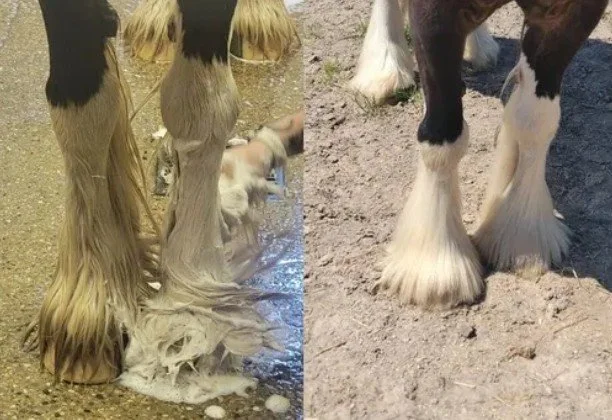
While the shampoos above have important roles, they shouldn’t be used as everyday cleaners. For routine grooming, our Soft Soap is a far better choice.
Why Soft Soap Matters
Soft soap cleans without stripping oils, helping the hair stay moisturized, flexible, and naturally stain‑resistant. It contains natural oils to replenish moisture missing in hair or removed by harsh cleaners, and is perfect for frequent use.
Benefits
Gentle, natural cleansing
Moisturizes instead of drying
Helps prevent re‑staining
Ideal for feathers, manes, and tails
Safe for frequent use
Soft soap is the perfect “reset” after using whitening, degreasing, or medicated shampoos — restoring moisture and protecting the coat.
⭐ Final Thoughts
Drying shampoos have their place: whitening for shows, degreasers for heavy grime, and medicated formulas for skin issues. But they all share one drawback — they make hair more prone to staining.
Using Hale Horse Soft Soap between these treatments helps maintain moisture, protect the coat, keep your horse cleaner for longer, and to skip the step of conditioning or oiling the hair after a bath.